A mole that changes appearance or a sore that doesn’t heal deserves a closer look. Other skin cancers develop without pain or obvious symptoms, making them harder to recognize.
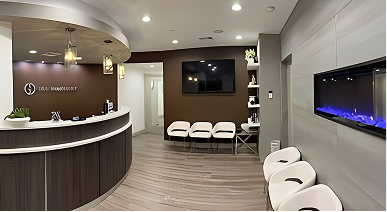
At Geria Dermatology, our board-certified dermatologists and physician assistants perform skin examinations in Rutherford and Verona, New Jersey. Along with our broader medical dermatology services, we evaluate suspicious growths and discuss appropriate follow-up when something needs attention.
What Is a Skin Cancer Screening?
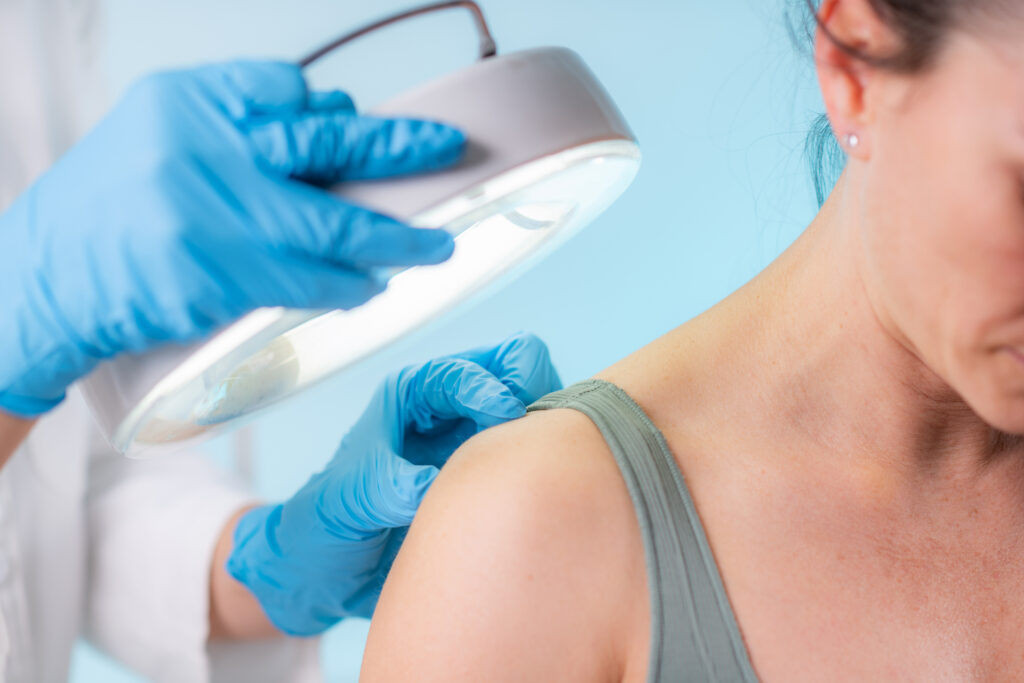
Skin cancer screening is a visual examination of the skin, generally performed to look for concerning changes before symptoms appear. An examination prompted by a bleeding growth or changing mole is considered a diagnostic evaluation.
During a full-body skin check, we look for unusual lesions and signs associated with basal cell carcinoma, squamous cell carcinoma, and melanoma.
These conditions can look different. Some appear as dark or irregularly colored spots, while others resemble scaly patches, pearly bumps, or sores that repeatedly bleed or crust.
What Happens During a Full-Body Skin Exam?
Your appointment begins with a discussion of your medical history, previous skin cancers, family history, and any spots that concern you.
For a complete examination, you may be asked to change into a medical gown. We inspect areas that are difficult to see yourself, including the scalp, back, feet, and skin beneath the nails. Your privacy and comfort remain important throughout the visit.
A dermatoscope, a handheld magnifying instrument, may be used to examine individual growths more closely.
Who Should Consider Skin Cancer Screening?
Your risk factors can help determine whether a screening examination is appropriate.
Patients with a personal history of skin cancer, unusual moles, a family history of melanoma, significant UV exposure, or a weakened immune system may benefit from discussing regular skin examinations.
Skin cancer can develop in people of every skin tone, including in areas that receive little sunlight.
How Often Should You Have Your Skin Checked?
There isn’t a single screening schedule for everyone.
We consider your medical history, number and type of moles, previous biopsy findings, and other risk factors before recommending an interval. Patients who have already been treated for skin cancer may need closer surveillance.
A new or changing growth should be assessed promptly rather than waiting for your next routine appointment.
How Can You Prepare for a Skin Check?
A little preparation helps us examine the skin more thoroughly:
- Remove nail polish when possible so changes beneath the nails are easier to see.
- Avoid heavy makeup that could conceal facial lesions.
- Make note of spots that have changed, bled, or failed to heal.
- Bring information about previous skin cancers, biopsies, or relevant medications.
You can also point out areas of concern during the examination, even if they appear small.
What Happens If a Spot Looks Suspicious?
An unusual mole isn’t necessarily cancerous. Some lesions can be monitored, while others require a biopsy.
When tissue testing is needed, a sample is removed and sent to a laboratory. The results help establish a diagnosis and guide the next steps.
If skin cancer is found, treatment depends on its type, location, and other clinical factors. Options may include standard surgical removal or Mohs micrographic surgery for selected cancers. Our skin cancer treatment services cover these and other approaches.
Why Choose Geria Dermatology for Skin Cancer Screening in Rutherford and Verona?
Evaluating a concerning lesion requires more than noticing an unusual color or shape. Your medical history, skin characteristics, and previous findings help determine whether a spot needs monitoring, biopsy, or treatment.
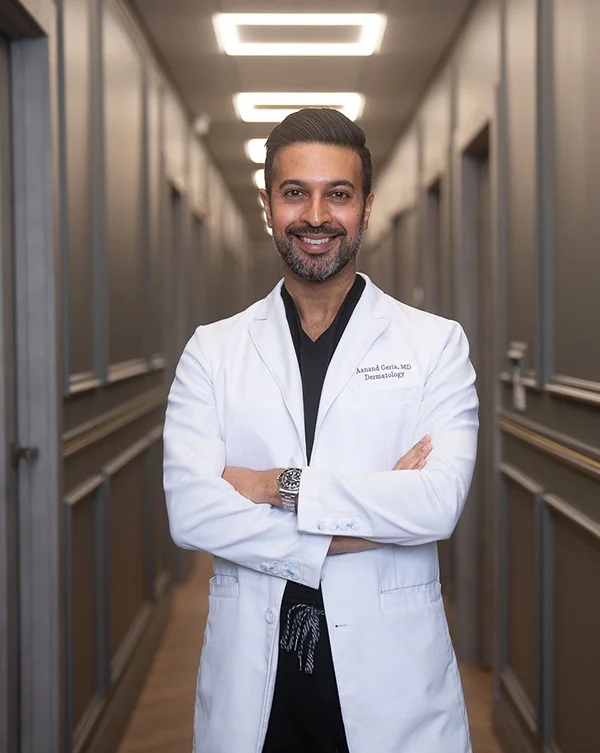
Our team includes four board-certified dermatologists: Aanand N. Geria, MD, FAAD,Hamza D. Bhatti, DO, FAAD, FACMS, Shawn Shih, MD, FAAD, and Kathleen Jedruszczuk, DO, FAAD.
Dr. Bhatti is a fellowship-trained Mohs surgeon with experience treating complex and high-risk skin cancers. His surgical training complements the medical dermatology experience of our broader team.
Whether we’re evaluating one changing mole or reviewing multiple lesions, we focus on explaining our findings and helping you understand the appropriate next steps.
Skin Cancer Screening Near Rutherford and Verona
We welcome patients at both offices.
Our Rutherford location serves Rutherford, East Rutherford, Lyndhurst, Nutley, Clifton, North Arlington, Wallington, and Hasbrouck Heights.
Our Verona office welcomes patients from Verona, Montclair, Cedar Grove, North Caldwell, West Caldwell, Caldwell, Livingston, Essex Fells, West Orange, Glen Ridge, and Bloomfield.
Frequently Asked Questions About Skin Cancer Screening
Schedule a Skin Cancer Screening in New Jersey
A changing mole or questions about your skin cancer risk are good reasons to seek professional guidance. Geria Dermatology welcomes new patients in Rutherford and Verona, NJ. Call 201-623-8000 or contact us to arrange an examination.